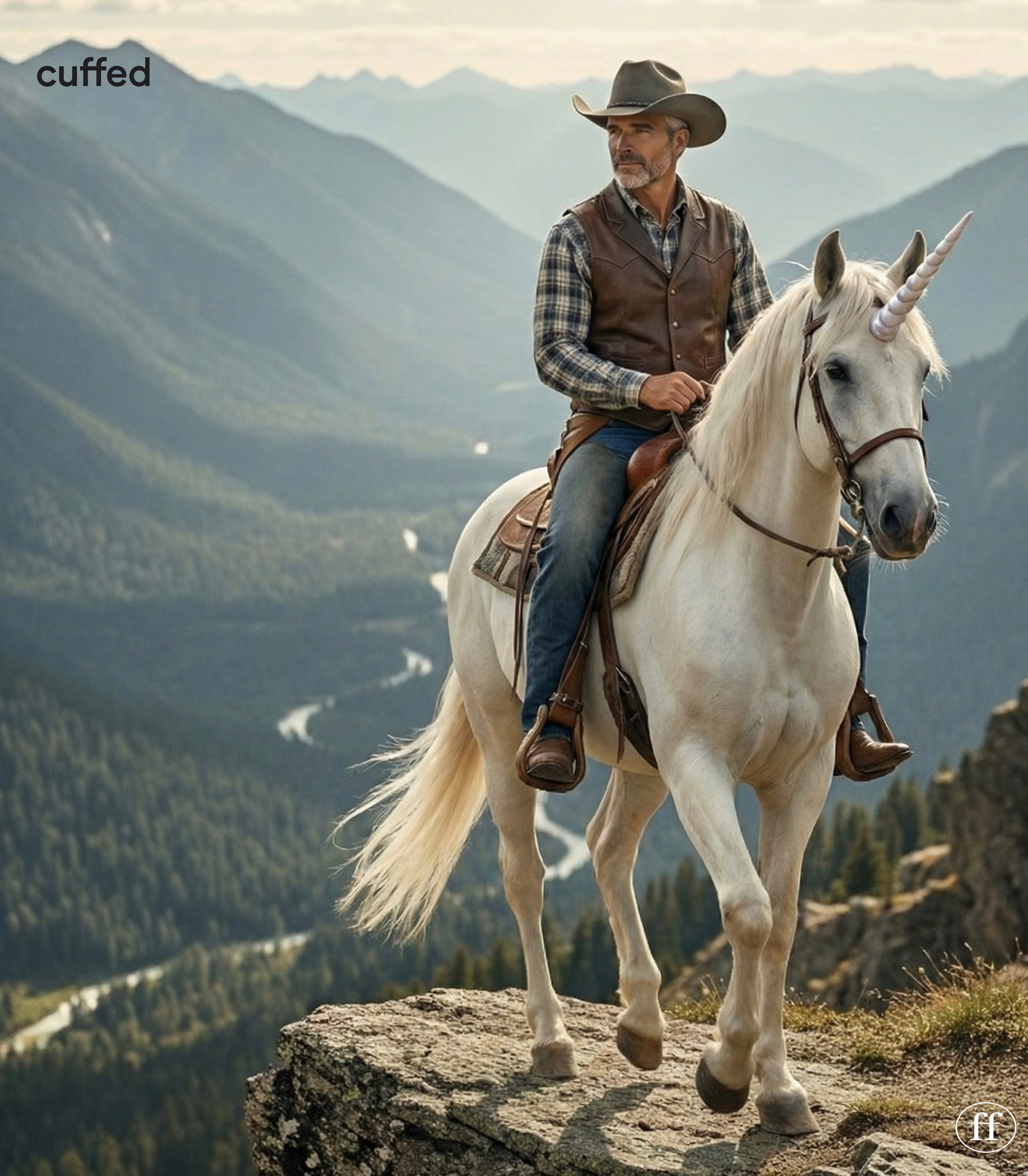
the unicorn problem | musing no. 65
what happens when the kind of partner everyone wants is statistically rare — and built for more than one story
new to cuffed? start here.
most people say they want depth.
very few ever stop to question what depth actually demands.
this musing came from a place of discomfort — the good kind.
the kind that hits after you realize you’ve been living inside an assumption you never chose.
what if the problem in modern relationships isn’t commitment…
but math?
what if some people are so emotionally and intellectually rare that asking one person to meet all of it was never realistic to begin with?
i unpack that tension here.
but the fuller conversation — the one with nuance, pauses, and edges — happens on the podcast.
if this piece made you stop for even a second,
listen to the episode.
that’s where i say the parts that don’t fit cleanly on the page.
before we begin, this musing is an extension of musing no. 50 | the men no woman knows how to hold. read or reread that first.
everyone says they want an emotionally intelligent partner.
very few ever stop to consider what happens when you actually become one.
real emotional intelligence isn’t just empathy.
it’s self-awareness.
pattern recognition.
restraint.
the ability to sit with discomfort without exporting it to someone else.
now add another layer.
what if you’re not only emotionally intelligent,
but also highly intelligent.
curious.
analytical.
obsessive about your craft.
drawn to niche interests, rare disciplines, or ways of thinking most people don’t share—or even recognize.
at some point, the math breaks.
because now you’re not looking for “a good partner.”
you’re looking for someone who can meet you across multiple dimensions at once.
emotional depth.
intellectual parity.
sexual compatibility.
psychological stamina.
and enough inner life of their own to not resent yours.
that person isn’t common.
they’re statistically rare.
so rare that calling them “your person” starts to feel less like realism
and more like mythology dressed up as romance.
we never talk about what happens then.
instead, we tell deep people to be patient.
to wait.
to compromise.
to shrink themselves until they fit inside a more convenient love story.
but what if the problem isn’t that you’re asking for too much?
what if the problem is that you’re asking one person
to hold the emotional, intellectual, and relational capacity of two?
some people don’t have shallow desires.
they have wide ones.
wide enough that no single relationship can carry the full weight
without collapsing into resentment, boredom, or quiet self-betrayal.
and yet we treat that truth like a moral failure.
as if wanting more connection automatically means less loyalty.
as if depth must equal exclusivity.
as if complexity should apologize for itself.
maybe the uncomfortable part isn’t whether this is right or wrong.
maybe it’s that some of you already recognize yourselves in it.
some of you are living this tension quietly.
some of you have tried to name it and been shut down.
some of you are already negotiating it inside relationships that look “normal” from the outside.
this isn’t an argument for chaos.
or avoidance.
or entitlement.
it’s an argument for honesty.
for admitting that some people don’t fit cleanly into the mythology of “one true everything.”
not because they can’t love deeply—
but because they already do.
and love, like intelligence,
doesn’t always want to be simplified.
the real conversation doesn’t end here.
it continues where people are willing to think out loud.
— author
if this unsettled you, there’s more waiting inside.
the deeper threads live beyond the surface—where ideas aren’t finished, and certainty isn’t required.
if this musing cracked something open for you, don’t rush to close it.
the cuffed toolkit exists for moments like this —
when old frameworks stop working
and you need language, structure, and clarity to think forward instead of retreat.
it’s not advice.
it’s not motivation.
it’s a set of tools for people who think deeply, feel intensely, and refuse inherited answers.


I have full spectrum friendships that layer in fulfillment over the intimacies of my spouse:
- the women who “get” me and listen and hold my hand and wipe my tears, who nod and commiserate in deep empathy;
- the men who philosophically challenge me without the skin in the game of building a household together, who also occasionally hold me while I cry or defend alternative points of view when I’m inflamed and outraged, keeping me intellectually accountable;
- my gay men friends who make me laugh and bring culture and fashion and brilliance into my otherwise bland couture life.
I can’t ask all this from my husband. Me and Walt contain multitudes; often my emotional audience needs to be larger than one. I’m a power user in the field of human experience.
These full-spectrum friends crackle with life and appeal, but they don’t threaten what I have with my husband, because he’s comfortable in his own body, he knows what he owns with me. We give each other what we need to survive what the not-safe-haven that the external world is lobs our way.
Perhaps we are all unicorns ourselves. I wouldn’t trade them for anything.